
17 FAQs About Landed Property Renovation in Singapore (2025)
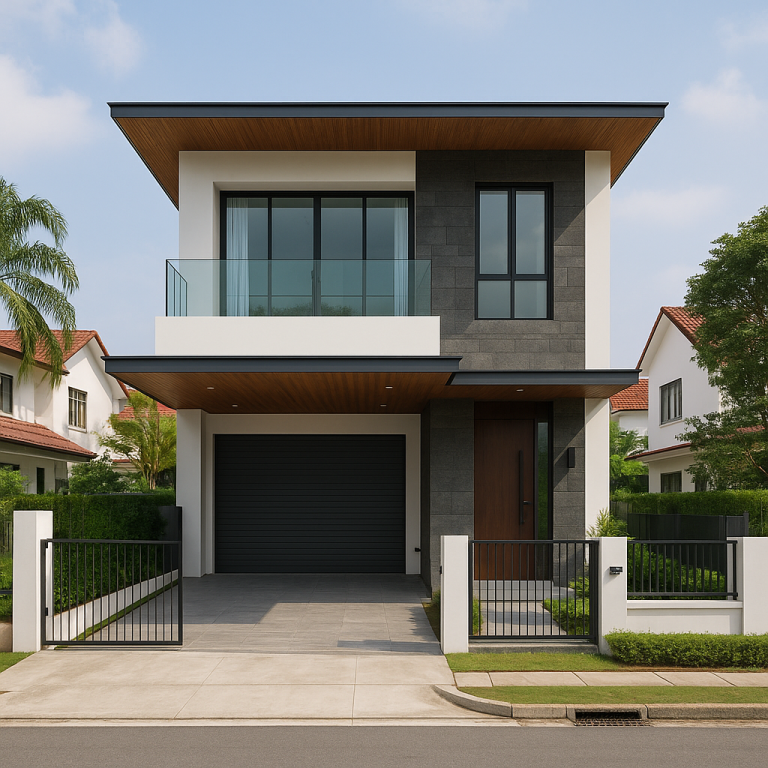
1. How much does it cost to renovate a landed property in Singapore?
Renovation costs vary widely depending on the size of your house and the quality of finishes you choose. Our landed renovation cost guide breaks these figures down by property type. Recent cost guides from 2025 suggest that:
- Light refreshes (partial upgrades) start from S$80,000 for small terraces or older homes needing mostly cosmetic work.
- Mid-range interior renovations typically range S$100,000 to S$500,000 for full kitchens, bathrooms, flooring and carpentry. Kitchens alone cost S$15k–40k and bathrooms S$10k–20k. Flooring adds S$5k–15k and painting S$3k–8k.
- Major structural works (Alterations & Additions or A&A) cost S$200,000–500,000 because they include reconfiguring layouts, moving walls and upgrading electrical, plumbing and air-conditioning systems.
- Luxury renovations or reconstruction exceed S$1 million and can top S$2 million when you rebuild the house with premium finishes, custom carpentry and high-end smart systems.
Prices are often quoted on a per-square-foot basis. Industry estimates place landed renovation rates between S$150 and S$500 per square foot depending on complexity and materials. Always collect itemised quotes and compare them, as site conditions (e.g., soil quality or structure) can influence costs considerably. For inspiration, browse our recent landed property interior design projects to see how different budgets translate into actual spaces.
2. What factors influence renovation costs?
Several variables determine the final bill:
- Property size and layout: Larger houses require more materials and labour. Complex layouts with odd corners or many storeys increase structural work.
- Finish level: High-end materials – such as imported marble, custom joinery or smart home systems – raise costs, whereas mid-range laminates and quartz are more budget friendly.
- Scope of works: Minor upgrades cost far less than full-scale demolitions and reconfigurations. Moving walls, adding rooms or changing the staircase all fall under A&A and require structural reinforcement.
- Approvals and compliance: Projects requiring submissions to URA and BCA (e.g., structural changes or GFA increases) demand fees and longer timelines.
- Hidden conditions: Older homes often have outdated wiring, corroded pipes or dampness that need rectification, adding S$50k–300k of reinforcement and waterproofing costs.
Understanding these factors helps you allocate budget wisely. If you’re unsure how to prioritise spending, our landed property interior design service walks you through a detailed cost plan during consultation.
3. What’s the difference between A&A, reconstruction and a full rebuild?
Singapore’s regulations classify major works based on how much of the existing structure you change:
- Additions & Alterations (A&A): Retains more than half of the original structure. It allows internal reconfiguration and limited extensions but cannot add an extra storey. This route is less expensive and faster than a rebuild.
- Reconstruction: Replaces more than 50 % of the existing structure or adds a storey. It involves tearing down significant portions, obtaining planning permission and meeting envelope control guidelines. Costs are higher because demolition and new structural work are required.
- New erection (full rebuild): Demolishes the entire house to build a new one. While it offers maximum design freedom, it triggers strict planning controls and higher construction costs. Good Class Bungalows, for instance, must adhere to plot size and height limits of two storeys plus attic.
Choosing between these options depends on the condition of your house, your desired layout and the cost difference. A&A makes sense if the structure is sound and you want to refresh layouts. Reconstruction or rebuilding becomes viable when the existing house is old, structurally weak or when extensive changes approach new-build costs. Consult a qualified architect or structural engineer to assess which route suits your property.
4. Do I need approval or permits for landed property renovation?
Yes. For interior works that do not change the Gross Floor Area (GFA) and keep the premises functioning as a self-sufficient home, you generally do not need planning permission. However, most landed projects involve structural changes or extensions; these require submission to the authorities:
- Building and Construction Authority (BCA): A Qualified Person (QP) must submit structural plans and secure approval before works start. The BCA processes standard building plan applications within 7 working days if all documents are in order.
- Urban Redevelopment Authority (URA): Required when you change GFA, height or site coverage. Envelope control guidelines govern allowable building height, setbacks and roof profiles
- Other agencies: Some projects need clearance from NParks (tree conservation), PUB (drainage and storm-water detention) or LTA (driveway modifications)
Skipping approvals can result in fines, forced rectifications or demolition. It’s wise to engage an architect or interior designer familiar with submissions to ensure compliance. Our free interior design proposal includes advice on what approvals are needed for your specific scope.
5. How long do renovation approvals take?
Approval timelines vary by project scope:
- Simplified submission (non-drainage A&A projects): BCA can approve within one working day.
- Standard structural submissions: Typically processed within 7–14 working days if all documents are complete.
- Multi-agency approvals: Projects involving URA, NParks, PUB and LTA can take several weeks to months because each agency reviews specific aspects.
These timeframes exclude the design and documentation period. It’s best to allocate at least 4–6 weeks for planning and permit preparation before construction starts. Our team helps expedite submissions by coordinating with consultants and authorities.
6. How long does a landed renovation usually take?
Project duration depends on complexity: (For the full phase-by-phase schedule, see our landed renovation timeline guide.)
- Minor interior upgrades: Painting, flooring and light carpentry typically finish in 1–2 months.
- Moderate renovation (kitchens, bathrooms, major carpentry): Allow 4–6 months from start to completion.
- Whole-house A&A: Interior-only renovations take 9–13 months; partial structural works need 11–14 months.
- Reconstruction or full rebuild: Expect 18–24 months, including demolition, design, approvals and construction.
Supply chain disruptions (e.g., imported materials) and labour shortages can extend timelines. Working with an experienced design-build team mitigates delays by planning material procurement and coordinating trades. Explore our landed house project gallery to see how different scopes translate into schedules.
7. What is the renovation process?
A typical landed renovation follows these stages:
- Site survey and design briefing – measure the house, discuss goals and budget.
- Concept development – produce layout plans, 3D renderings and mood boards; finalise specifications and costs.
- Submission and approvals – QP prepares drawings and structural calculations for BCA/URA; obtain permit approvals.
- Demolition and hacking – remove walls, fixtures and flooring as per plan.
- Structural and M&E works – build new walls, reinforce foundations, install electrical wiring, plumbing and air-conditioning.
- Wet works – tiling, waterproofing, screeding and plastering.
- Carpentry and finishes – fabricate custom cabinets, doors and fittings; apply paint and install flooring.
- Final touches and styling – install fixtures, lighting and soft furnishings; test systems; rectify defects.
Engaging a design-build firm streamlines this sequence because designers and contractors work together. If you use separate architect and builder, ensure clear communication to avoid delays.
8. Can I stay in my landed home during renovation?
It depends on the scope. If you’re only updating one or two rooms, you might be able to live in other parts of the house. However, structural works, hacking and major M&E upgrades create dust, noise and safety hazards. Haus Atelier advises that homeowners often relocate temporarily for A&A or reconstruction projects because these works span several months and require water and power shutdowns. Staying in can slow down construction and prolong the timeline. To minimise disruption, we encourage clients to plan short-term accommodation in advance.
9. What are the most expensive parts of landed renovations?
Large cost drivers include:
- Structural alterations: Demolition, new foundations and reinforcement works often range S$100k–500k.
- Electrical and plumbing upgrades: Rewiring, new electrical boards, plumbing stacks and air-conditioning systems cost S$50k–150k.
- Carpentry and finishes: Custom cabinets, wardrobes and feature walls can run S$100k–300k.
- Smart home and automation: Integrated lighting, climate control and security systems add S$50k–200k.
Interior styling items like lighting, furnishings and landscaping, though smaller individually, add up quickly if you’re not careful. Breaking down quotations into line items helps you prioritise essential components.
10. What hidden costs should I watch out for?
Even well-planned projects encounter surprises. Common hidden costs include:
- Structural reinforcements: Weak foundations or termite damage require underpinning or new columns, costing S$50k–300k.
- Drainage and storm-water detention systems: PUB may require on-site detention tanks if the redevelopment increases runoff.
- Soil conditions and piling: Soft soil or tree roots can necessitate deeper piles or more extensive excavation.
- Heritage and conservation requirements: Conservation houses demand period-correct materials and restoration techniques, which are costlier.
Set aside a contingency of 10–15 % of your budget to cover unexpected expenses.
11. In what order should renovations be done?
The sequence of works affects both efficiency and cost. A practical order is:
- Design and approvals – finalise the plan and get permits.
- Hacking and demolition – remove what needs to go.
- Structural and M&E works – ensure the “bones” and services are completed before finishing touches.
- Wet works – tiling, screeding and waterproofing.
- Carpentry – fabricate and install built-ins once wet works are cured.
- Painting and finishes – apply paint and protective coatings.
- Installation and styling – bring in lighting, furniture and décor.
Following this sequence minimises rework and avoids damaging completed finishes. Our design-build team coordinates trades to keep the workflow smooth and reduces downtime.
12. Are there restrictions on building extensions?
Yes. URA’s envelope control guidelines set height, plot coverage and setback requirements for different landed housing types. Terrace-specific rules, costs and design ideas are covered in our terrace house renovation guide. Common restrictions include:
- Storey limits and roof profiles: Terraces and semi-detached homes are usually capped at 2.5 storeys; bungalows can go up to two storeys plus an attic.
- Setbacks: Front, side and rear setback distances vary by housing type and must be adhered to when extending rooms or adding balconies.
- Plot ratio and site coverage: For example, Good Class Bungalows must have a minimum plot size of 1,400 m² and a maximum site coverage of 40 %, leaving the rest for greenery and outdoor space.
Before planning an extension, consult URA guidelines and engage a QP to prepare drawings that comply with envelope control and site coverage rules.
13. Can I add a basement or attic?
Basements and attics are possible but tightly controlled. According to URA rules cited by Stacked Homes:
- A basement cannot protrude more than one metre above ground level; otherwise it is counted as an extra storey.
- A standard basement may extend up to the road buffer or road reserve line, while a sunken basement can extend to the property boundary only if it doesn’t interfere with sewage lines or neighbour properties.
- Before digging, a professional assessment is crucial because soil conditions and sewage pipe locations may make basements impractical.
Attics are governed by storey limits and roof profiles. Generally, you can include an attic within the allowed storey height (e.g., 2.5 storeys). Attics must remain within the roof envelope and may not count as a separate floor. Adding an attic often requires reinforcing the existing roof structure and meeting fire safety requirements.
14. Do I need an architect or can an interior designer handle landed renovations?
It depends on your scope:
- For interior works without structural changes or GFA increases, a licenced interior designer can manage the design and execution.
- For structural alterations, A&A or reconstruction, a Qualified Person (architect or structural engineer) must submit plans to BCA and URA. They ensure safety and code compliance.
- Engaging a design-build firm can simplify the process because the architect, interior designer and contractor work together, reducing miscommunication and cost overruns. Using separate architect and contractor offers more design flexibility but requires closer project management.
15. Is it worth rebuilding instead of renovating?
Rebuilding makes sense when the cost and effort of A&A approach those of new construction. PLB Insights (July 2025) notes that older properties (especially pre-1990 houses) often have outdated foundations and may require extensive reinforcement; in such cases, rebuilding allows you to maximise new layout options and site coverage while meeting modern building codes. However:
- A&A is usually faster and cheaper if your existing structure is sound and you’re satisfied with the envelope
- Rebuilds trigger stricter planning controls (e.g., setback and plot ratio requirements) and may require surrendering land for road widening or other public purposes
Consider the age and condition of your house, desired lifestyle changes and long-term value. Consult professionals to compare budgets and evaluate which approach gives the better return.
16. What mistakes should homeowners avoid?
Visionary Interior’s 2025 guide identifies several pitfalls that cause delays and budget overruns:
- Underestimating planning time: Many homeowners expect construction to start immediately, but design development, material selection and permit preparation can take 4–6 weeks
- Poor contractor communication: Without clear timelines, progress updates and issue tracking, projects suffer from misaligned expectations and missed milestones
- Budget blowouts and scope creep: Last-minute material upgrades, hidden structural issues and changes after construction begins can rapidly increase costs
- Ignoring regulatory approvals: Skipping HDB/BCA submissions or starting work before permits are issued leads to fines and delays
- Material procurement delays: Failing to confirm availability of tiles, fittings and fixtures can halt work
Avoid these mistakes by working with experienced professionals, securing approvals early and maintaining open communication throughout your renovation.
17. How do I choose the right contractor or design firm?
Selecting the right team is critical to a successful renovation. Haus Atelier recommends looking for firms that:
- Showcase a portfolio of similar landed projects and have in-house design and engineering expertise
- Provide transparent, itemised costing and clear contracts with milestones and payment schedules
- Offer dedicated project management and communication, so you always know the status of your renovation
Be cautious of bids that appear too low or lack references. Use third-party reviews and accreditations (e.g., CaseTrust, BCA registration) to verify credibility. Consider scheduling a consultation with our interior design services team to see if we’re the right fit for your project.
Bonus: How can I keep my renovation within budget?
Staying on budget requires discipline and foresight:
- Define scope early: Outline exactly what you want to achieve and prioritise must-have items; avoid adding work mid-project
- Get multiple quotes: Compare at least three contractors and ensure each quote covers the same scope and material quality
- Plan materials upfront: Choose tiles, fixtures and appliances before work starts to avoid delays and price fluctuations
- Include a contingency: Allocate 10–15 % of your budget for unexpected costs
Want personalised budgeting help? Schedule a consultation to receive a detailed cost plan tailored to your house and lifestyle.
Ready to design your home?
Our design team will get back to you within 24 hours with a tailored proposal.