
BTO Renovation Cost in Singapore (2026): 3, 4 & 5-Room Guide
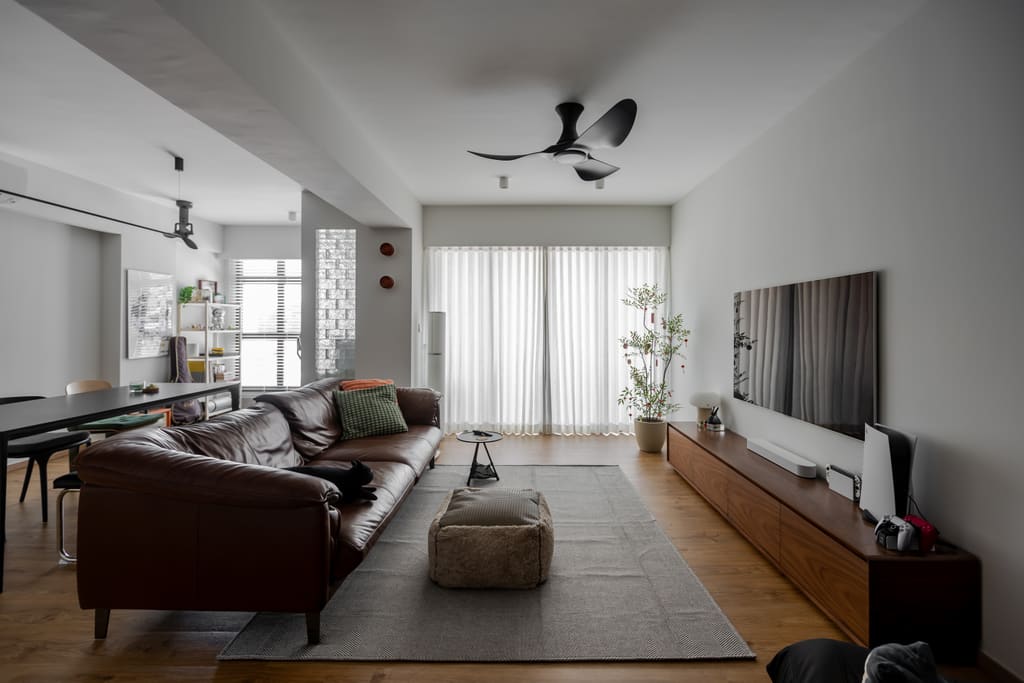
A BTO renovation in Singapore costs between S$22,000 and S$60,000 for most 4-room flats in 2026, depending on how much carpentry you build and whether you replace the HDB-provided flooring. Three-room flats run roughly S$18,000–45,000 and five-room flats S$25,000–75,000, while designer-level renovations with extensive built-ins can pass S$90,000 in any flat size.
Those are wide ranges, and most articles stop there. This guide breaks down where the money actually goes, why BTO is cheaper than resale, what HDB's rules mean for your budget, and where you can safely cut — based on the BTO projects we design and build, from Tengah Garden Walk to Punggol and Ang Mo Kio. Tengah owners: the estate has quirks of its own — see our Tengah BTO renovation guide.
How much does a BTO renovation cost in 2026?
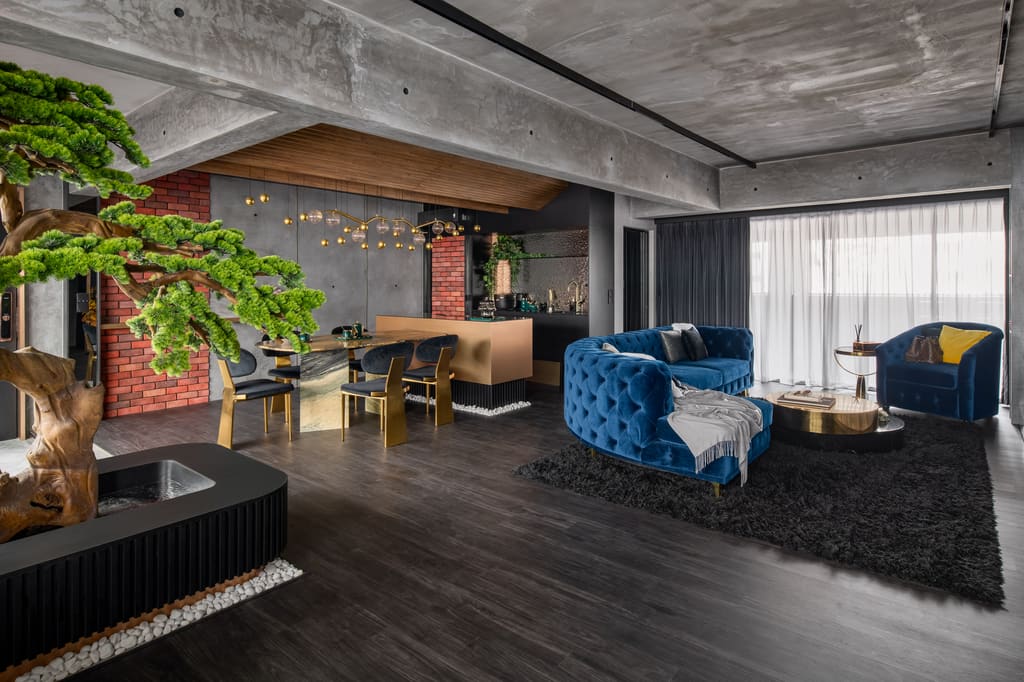
For a typical 4-room BTO, budget S$22,000–35,000 for a light renovation, S$38,000–55,000 for a mid-range scope with full carpentry, and S$60,000–90,000+ for a designer renovation with hacking, feature ceilings and premium finishes. Here's how that scales across flat types:
| Flat type | Light (kitchen + wardrobes) | Mid-range (full carpentry) | Extensive (hacking + premium) |
|---|---|---|---|
| 3-room BTO | S$18,000–30,000 | S$30,000–45,000 | S$45,000–70,000 |
| 4-room BTO | S$22,000–35,000 | S$38,000–55,000 | S$60,000–90,000+ |
| 5-room BTO | S$25,000–40,000 | S$45,000–65,000 | S$70,000–110,000+ |
A "light" scope means keeping HDB's flooring and doors, and building only the essentials: kitchen cabinets, wardrobes, and basic electrical works. Mid-range adds a TV feature wall, full-height storage, false ceilings or cove lighting, and better materials. Extensive scopes involve hacking walls, redoing bathrooms, and premium surfaces like sintered stone.
Treat any quote far below these ranges with suspicion. If a package looks too cheap, the difference usually reappears later as variation orders.
Why is a BTO renovation cheaper than a resale renovation?
A BTO flat is handed over as a bare, brand-new shell — fresh screed, new wiring, new plumbing — so there's nothing to demolish and little to make good, which typically saves 15–30% versus an equivalent resale renovation. In a resale flat, hacking, disposal, rewiring and re-plumbing can consume S$10,000–25,000 before a single cabinet is built. The full resale numbers are in our resale HDB renovation cost guide.
The flip side: BTO owners often opt in for HDB's flooring and sanitary fittings, and a good design works with them rather than ripping out new materials. That single decision — keep or replace the HDB flooring — swings a 4-room budget by S$8,000–15,000.
What takes up most of a BTO renovation budget?
Carpentry is the biggest line item in almost every BTO renovation — typically 35–45% of the total. A mid-range 4-room flat needs roughly 28–35 linear feet of carpentry (kitchen cabinets, wardrobes, TV console, shoe cabinet) at S$220–320 per foot, which is S$7,000–11,000 before anything else. Kitchen-specific budgets get their own breakdown in our kitchen renovation cost guide.
- Carpentry: 35–45% — kitchen, wardrobes, feature walls, storage
- Flooring and tiling: 10–20% — or near zero if you keep HDB flooring
- Electrical works: 8–12% — points, lighting circuits, concealed wiring
- Painting and ceiling works: 8–12% — including false ceilings and cove lighting
- Glass, doors and fittings: 5–10%
- Plumbing and wet works: 5–15% — highest if bathrooms are redone
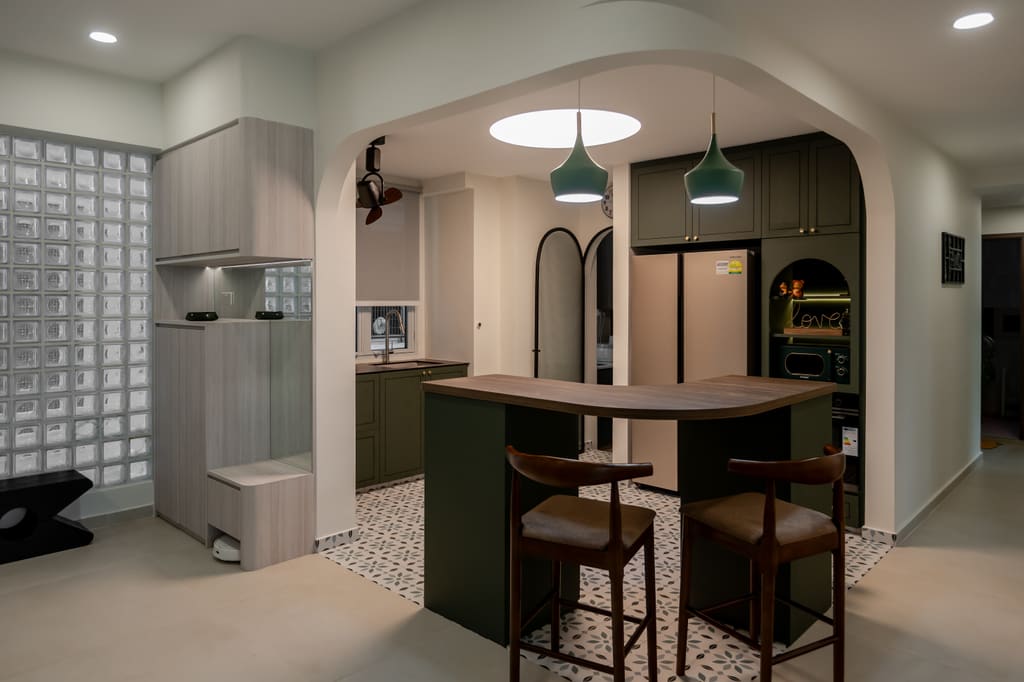
Design ambition moves these numbers more than flat size does. For what those directions look like at 4-room scale, browse our 4-room HDB design ideas. Our mid-century project at 238B Tengah Garden Walk spent its budget on a rebuilt galley kitchen with a freestanding range cooker and glass-block partitions — carpentry and masonry heavy — while keeping bedrooms deliberately simple. That's the trade-off thinking that keeps a characterful renovation inside a sane budget.
Do BTO renovations need an HDB permit?
Yes — any hacking of walls, changes to bathrooms, or works affecting the flat's structure need an HDB renovation permit, applied for by an HDB-registered contractor under the Registered Renovation Contractors' Scheme. Cosmetic works such as carpentry, painting and most flooring overlays don't need one. The complete permit/no-permit list is in our HDB renovation permit guide. Full rules are in HDB's renovation guidelines.
Two BTO-specific rules catch owners off guard. First, you can't retile bathroom floors within the first three years — HDB's waterproofing membrane warranty applies, so bathrooms are overlaid or left as-is instead. Second, noisy works are restricted to weekdays 9am–5pm, which stretches timelines slightly. Our HDB interior design team files all permits as part of the project, so this is paperwork you shouldn't need to touch yourself.
Where can you save on a BTO renovation — and where shouldn't you?
The safest savings come from keeping HDB's provided flooring and doors, choosing loose furniture over built-ins in bedrooms, and phasing non-essential carpentry — together these can trim S$10,000–20,000 from a 4-room budget without hurting the result.
Sensible places to save:
- Keep HDB flooring and internal doors; they're new and warrantied
- Use standard laminates instead of specialty finishes for internal carpentry surfaces
- Buy wardrobes for spare rooms as loose furniture you can change later
- Phase the works: essential carpentry now, feature joinery a year later
Places you shouldn't cut:
- Electrical works — too few points is the single most-regretted saving, and adding them after carpentry is painful
- Carpentry hardware — hinges and drawer runners are what fail first on cheap builds
- Waterproofing and plumbing — any failure here costs multiples of the saving — our bathroom renovation cost guide shows where that money actually goes
As Eric Teo, one of our designers, puts it: "Carpentry is the lever. Decide which two or three built-ins genuinely change how you live, do those properly, and be ruthless about the rest."
How should you budget for a BTO renovation, step by step?
Set your ceiling first, reserve 10–15% as contingency, and only then design to the remaining number — not the other way around. The sequence we walk clients through:
- Fix your all-in ceiling, including furniture and appliances — not just renovation works
- Set aside 10–15% contingency before allocating anything
- List must-haves versus nice-to-haves, room by room
- Decide the big swings early: keep or replace HDB flooring, hack or keep walls
- Get itemised quotes on the same scope — package prices hide more than they reveal. You can request a free itemised quotation from us with your floor plan
- Lock selections before works start; mid-project changes are the top cause of budget and timeline overruns
Renovation costs and timelines are joined at the hip — a rushed schedule inflates costs, and a blown budget stretches schedules. Our BTO renovation timeline guide covers the other half of that equation, from key collection to move-in.
The bottom line
For 2026, realistic BTO renovation budgets are S$18,000–70,000 for 3-room, S$22,000–90,000 for 4-room and S$25,000–110,000 for 5-room flats, with most owners landing in the middle bands. Carpentry drives the bill, HDB's rules shape what's possible in year one, and the cheapest month to fix your budget is the one before you sign anything. Explore our BTO interior design services to see how we plan scope and budget together from day one.
Ready to design your home?
Our design team will get back to you within 24 hours with a tailored proposal.